
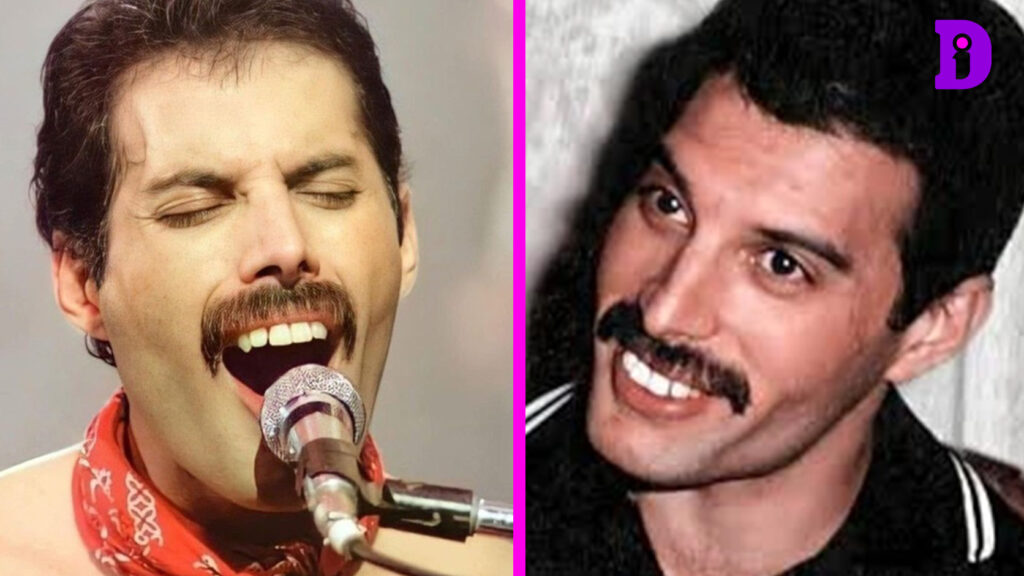

Freddie Mercury Teeth smile was as recognizable as his voice. The Queen frontman could command a stadium with his performance, yet photographs and videos often captured him instinctively covering his mouth or pulling his upper lip over his teeth. The reason was unusual: Mercury was widely reported to have four extra teeth in his upper mouth, which pushed his front teeth forward and created his distinctive overbite.
The story has become even more familiar since Bohemian Rhapsody, in which Rami Malek wore specially made prosthetic teeth to recreate Mercury’s appearance. But the story goes beyond a memorable physical feature. The extra teeth were reportedly a source of insecurity for Mercury. At the same time, his decision not to have them corrected became linked to a belief that dental treatment might interfere with his singing. Here is what is known, what remains uncertain, and why his smile became part of his identity.
Quick Bio
| Detail | Information |
|---|---|
| Full Name | Farrokh Bulsara |
| Stage Name | Freddie Mercury |
| Born | 5 September 1946 |
| Birthplace | Stone Town, Zanzibar |
| Profession | Singer, songwriter and musician |
| Best Known For | Lead vocalist of Queen |
| Band | Queen |
| Years Active | 1969–1991 |
| Died | 24 November 1991 |
Mercury was born Farrokh Bulsara in Zanzibar and spent much of his childhood in India before his family moved to England in 1964. He later became the lead singer and a major creative force behind Queen.
Why Did Freddie Mercury Have Four Extra Teeth?
The simplest explanation is that Mercury was born with additional teeth in his upper mouth. Several reputable accounts describe four extra upper teeth pushing his front teeth forward, producing the prominent overbite associated with his appearance.
In dental terminology, having additional teeth is generally known as hyperdontia, while the additional teeth themselves are called supernumerary teeth. However, Mercury’s personal dental records have not been made publicly available, so there is no public dental chart or X-ray that independently documents exactly how his teeth were positioned.
The commonly reported story is therefore based on biographical accounts, interviews, and coverage surrounding Bohemian Rhapsody, rather than a publicly released medical record.
How His Extra Teeth Changed His Smile
The extra teeth did not simply make Mercury’s mouth look larger. They reportedly pushed his normal front teeth forward, creating the protruding appearance that became one of his most recognizable features.
That appearance was noticeable from an early age. Accounts of Mercury’s childhood describe him being teased about his prominent teeth, with “Bucky” reportedly used as a nickname.
As an adult, Mercury became more confident on stage, but that did not necessarily mean he became comfortable with his smile. Rami Malek, who studied Mercury closely for Bohemian Rhapsody, noticed that Mercury frequently appeared to cover his teeth with his lips. Malek deliberately incorporated that behavior into his performance.
This is an important part of the story. Mercury’s teeth were not simply a quirky celebrity feature. They were reportedly something he was self-conscious about, even while his enormous stage presence made almost every other aspect of his appearance seem deliberate.
Did Freddie Mercury Refuse to Fix His Teeth?
The popular explanation is that Mercury did not want orthodontic or corrective treatment because he feared changing his teeth might affect his voice. That belief has been repeated in biographies and accounts of his life, including coverage of Bohemian Rhapsody.
There is an important distinction, however. There is no solid evidence that his four extra teeth were responsible for his exceptional singing ability or four-octave vocal range.
Mercury was widely celebrated for his extraordinary voice, and the idea that his unusual dental structure somehow created his vocal range became part of his mythology. The safer conclusion is that Mercury reportedly believed changing his teeth could be risky for his singing and chose to leave them alone.
That decision may have been psychologically important as well. Correcting the feature he disliked would have meant altering something that had been part of his identity since childhood. Eventually, the smile that had embarrassed him became instantly associated with Freddie Mercury.
Freddie Mercury Teeth in Bohemian Rhapsody
The teeth became an important detail in the 2018 Queen biopic Bohemian Rhapsody. Rami Malek did not simply rely on makeup to reproduce Mercury’s smile. Prosthetic dental technician Chris Lyons created specially designed teeth that altered Malek’s mouth and pushed his lip forward to reproduce Mercury’s overbite.
Malek began practicing with the prosthetic teeth well before filming. He explained that wearing them initially made him feel insecure, which helped him understand something about Mercury’s physical behavior and vulnerability.
The production therefore treated the teeth as more than a visual gimmick. They helped Malek reproduce Mercury’s silhouette, facial expressions and characteristic habit of hiding his teeth.
The film did, however, dramatize aspects of the story. The famous explanation that Mercury’s four extra teeth gave him a musical advantage works well as dialogue, but it should not be treated as established dental or vocal science.
Were Freddie Mercury Teeth Really Responsible for His Voice?
No convincing evidence shows that the extra teeth gave Mercury his famous vocal range.
Mercury’s voice resulted from a combination of anatomy, training, musical technique, and an unusually distinctive instrument. Researchers have examined recordings of his voice, while biographies and interviews have documented his approach to singing and performance. The claim that four additional teeth directly produced his vocal abilities is much less certain.
This distinction matters because the story is often repeated as though it were a medical fact. Mercury may have believed that altering his teeth could affect his singing, but that is different from proving that his unusual dental structure created his voice.
His refusal to change them nevertheless became an interesting example of how a physical insecurity can become inseparable from a public identity.
Why Did Freddie Mercury Smile Become Iconic?
Mercury’s teeth became iconic partly because they contrasted with the rest of his carefully constructed stage image. He could appear flamboyant, theatrical and completely fearless in front of tens of thousands of people, yet his smile occasionally revealed a much more private insecurity.
That contrast made the feature memorable. His mustache, short hair in later years, stage costumes, microphone stand, and energetic performances all contributed to his image, but his smile was something he did not seem to have designed for himself.
His career with Queen eventually transformed that imperfection into recognition. The band’s official biography describes Mercury as one of rock music’s greatest performers and highlights his role as lead vocalist and creative force.
By the time Queen performed at Live Aid in 1985, Mercury was already one of the world’s most recognizable rock stars. His appearance, including his distinctive smile, was now part of an established visual identity.
What Happened to Freddie Mercury?
Freddie Mercury died on 24 November 1991, aged 45. The official biography records that he died after his struggle with AIDS, bringing an end to the life of one of rock’s most influential frontmen.
His legacy has continued through Queen’s music, archival performances, and renewed interest generated by Bohemian Rhapsody. That renewed attention also brought small details of his appearance, including his teeth, back into popular discussion.
The story remains compelling because it shows a less polished side of a performer who was famous for extraordinary confidence. His smile was distinctive long before it became a piece of pop-culture trivia.
Conclusion
The story of Freddie Mercury teeth is ultimately about more than an unusual smile. Mercury was reportedly born with four additional upper teeth, which pushed his front teeth forward and gave him the overbite that became one of his most recognizable features. He was self-conscious about them, yet he chose not to have them corrected, reportedly because he feared that changing his teeth could affect his singing.
There is no good evidence that the extra teeth created his remarkable vocal ability. What they did create was a distinctive feature that became inseparable from his public image. From Queen’s biggest performances to Rami Malek’s recreation in Bohemian Rhapsody, that smile has remained part of the visual language of Freddie Mercury.
The irony is fitting: something Mercury reportedly tried to hide eventually became one of the details that made him instantly recognizable.
More Celebrity: Explore in-depth biographies, career journeys, family backgrounds, and the latest updates on your favorite celebrities at
(FAQs)
How many extra teeth did Freddie Mercury have?
Freddie Mercury was widely reported to have four extra teeth in his upper mouth. These additional teeth reportedly pushed his front teeth forward, creating his famous overbite. There is no publicly available dental chart from Mercury, so the four-extra-teeth account comes from biographical and media sources rather than released dental records.
Did Freddie Mercury have his teeth fixed?
No. Accounts of Freddie Mercury’s teeth indicate that he chose not to have the distinctive dental arrangement corrected. The commonly repeated explanation is that he was concerned dental treatment could affect his singing voice. However, there is no strong evidence that correcting the teeth would actually have damaged his vocal range.
Did Freddie Mercury teeth give him his vocal range?
There is no reliable evidence that the four extra teeth directly gave Mercury his exceptional vocal range. The connection became part of the story surrounding his appearance, and Mercury reportedly believed changing his teeth could affect his singing. His vocal abilities are better understood as the result of his natural voice, technique, and musical development.
Why did Rami Malek wear fake teeth as Freddie Mercury?
Rami Malek wore custom-made prosthetic teeth in Bohemian Rhapsody to reproduce Mercury’s prominent overbite and distinctive facial appearance. Dental technician Chris Lyons created the prosthetics, which were designed to push Malek’s upper lip forward in a way that resembled Mercury.
Was Freddie Mercury embarrassed by his teeth?
Accounts from people involved in portraying Mercury and biographies of the singer suggest that he was self-conscious about his teeth. Rami Malek observed that Mercury often covered them with his lips, and Malek deliberately reproduced that habit in the film.
What is the real story behind Freddie Mercury Teeth?
The real story is that Mercury was widely reported to have four additional upper teeth that pushed his front teeth forward. The unusual arrangement contributed to his distinctive overbite and was reportedly a lifelong insecurity. Although the idea that the teeth protected or created his singing range is famous, there is no convincing evidence proving that claim.