
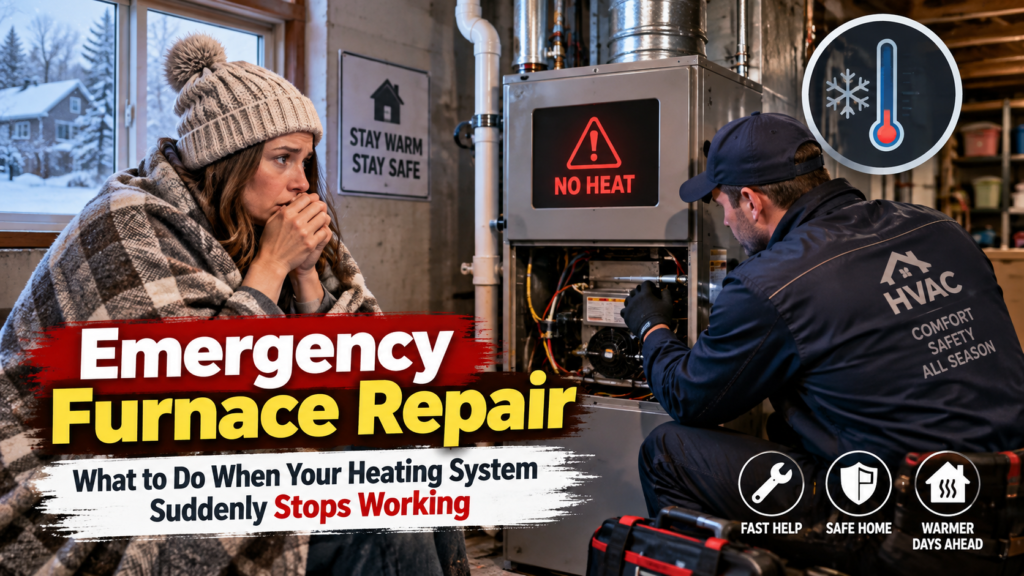

A furnace failure can quickly become more than an inconvenience when outdoor temperatures are extremely cold.
If the heating system suddenly stops producing heat, homeowners need to know how to respond without making
the situation worse. Recognizing when emergency furnace repair may be necessary can help protect household
comfort and prevent avoidable equipment damage. While a few basic checks may reveal a simple issue, unusual
smells, electrical concerns, or persistent heating failures should receive appropriate professional attention.
Recognizing a Furnace Emergency
Not every heating problem is an emergency. A slightly cooler room or minor change in operating sound may allow
time for a standard inspection.
Other situations require faster attention.
A complete loss of heat during severe winter weather is one obvious example. The indoor temperature can decline
steadily, creating uncomfortable conditions and potentially affecting plumbing if the property becomes extremely
cold.
Homeowners should also take unusual odors and signs of electrical trouble seriously.
Safety Comes Before Troubleshooting
If you smell gas or suspect a gas leak, avoid trying to diagnose or repair the furnace yourself. Leave the affected
area and follow appropriate local emergency and utility safety procedures.
Likewise, visible smoke, sparking, burning smells, or other signs of an electrical hazard should never be treated as
routine furnace problems.
Professional assistance is the appropriate response when safety may be involved.
Start With a Few Simple Checks
When no immediate safety concern exists, homeowners can check several basic items before assuming the
furnace has suffered a major failure.
First, look at the thermostat. Confirm that it is set to the appropriate heating mode and temperature.
Next, determine whether the furnace appears to have power. A tripped breaker or another electrical interruption
can prevent normal operation, although repeatedly resetting a breaker that continues to trip is not advisable.
The air filter can also be inspected if it is safely accessible.
Homeowners who need local emergency HVAC assistance should seek professional evaluation when these simple
checks do not restore normal heating.
Don’t Repeatedly Restart a Malfunctioning Furnace
Repeatedly switching equipment off and on is not a reliable repair method.
If the furnace starts and then quickly shuts down again, repeated attempts may place additional stress on the
system without addressing the underlying issue.
Instead, note what the furnace is doing. This information can be useful when describing the problem to a
technician.
Warning Signs That Need Prompt Attention
A complete shutdown is not the only reason emergency furnace repair may become necessary. Some problems
allow the furnace to continue operating while indicating a potentially serious condition.
Strong burning odors, repeated electrical interruptions, abnormal operating sounds, or a system that behaves
unpredictably deserve attention.
Homeowners should also respond when the furnace operates but cannot maintain a safe and reasonable indoor
temperature during very cold conditions.
Unusual Furnace Noises Can Provide Clues
Furnaces naturally make some noise when starting, running, and stopping. However, homeowners usually become
familiar with these normal operating sounds.
New banging, grinding, squealing, rattling, or persistent buzzing can indicate that something has changed.
A sound alone cannot provide an accurate diagnosis, but a sudden or severe noise should not simply be ignored.
Why Furnaces Sometimes Stop Producing Heat
Heating systems are complex, and several different conditions can lead to similar symptoms.
Airflow restrictions may interfere with normal operation. Thermostat or control problems can affect heating cycles.
Mechanical or electrical components may also develop faults through normal wear.
Because the possibilities vary, proper diagnosis is essential.
Replacing or adjusting components without identifying the actual cause can fail to solve the problem and may
introduce additional risks.
Cold Weather Makes Fast Action Important
During mild weather, homeowners may have more flexibility when dealing with reduced heating performance. Deep
winter conditions create a different situation.
A home can lose heat gradually after the furnace stops operating. How quickly temperatures fall depends on
insulation, outdoor conditions, air leakage, and other property characteristics.
Acting early can help prevent the situation from becoming more difficult.
Protect the Home While Waiting for Help
If heating is unavailable, keep exterior doors and windows closed to reduce unnecessary heat loss. Closing
curtains or blinds may also help limit heat transfer through windows.
Avoid unsafe methods of heating the home. Equipment that is not designed for indoor space heating should never
be used as a substitute for a functioning furnace.
Follow manufacturer instructions for any approved supplemental heating equipment and maintain appropriate
safety precautions.
Preventive Maintenance Can Reduce Surprises
Emergency failures cannot always be predicted, but routine furnace maintenance can identify some developing
problems before they cause an unexpected shutdown.
An inspection may reveal wear, airflow concerns, dirty components, or unusual operating behavior.
Scheduling maintenance before the coldest part of winter gives homeowners an opportunity to address concerns
while the furnace is not yet under maximum seasonal demand.
Pay Attention Before a Breakdown Happens
Many furnace problems provide early warning signs.
Longer heating cycles, increasingly frequent starts and stops, weak airflow, inconsistent room temperatures, and
new noises can all suggest that the system needs attention.
A furnace that seems to be working harder each week should not necessarily be considered normal simply
because it continues producing heat.
Keep Furnace Airflow Healthy
Good airflow supports effective heating.
Homeowners should check appropriate filters regularly and replace or clean them according to system
requirements. Supply vents and return openings should also remain clear of furniture, rugs, curtains, and other
obstructions.
Restricted airflow can reduce comfort and place unnecessary stress on heating equipment.
Persistent airflow problems, however, may require professional evaluation rather than repeated household
adjustments.
Conclusion: Respond Quickly and Safely
Knowing when to request emergency furnace repair can make a stressful winter heating failure easier to manage.
A complete loss of heat during severe cold, suspected gas problems, electrical warning signs, unusual odors, or
unpredictable furnace operation should never be casually ignored.
Homeowners can perform basic thermostat, power, filter, and airflow checks when it is safe to do so, but
complicated repairs belong with qualified professionals. Preventive maintenance and early attention to changing
furnace behavior can also reduce the likelihood of being caught off guard. Most importantly, when a heating
problem involves potential safety concerns, protecting people and property should always come before attempting
to restore the furnace yourself.