
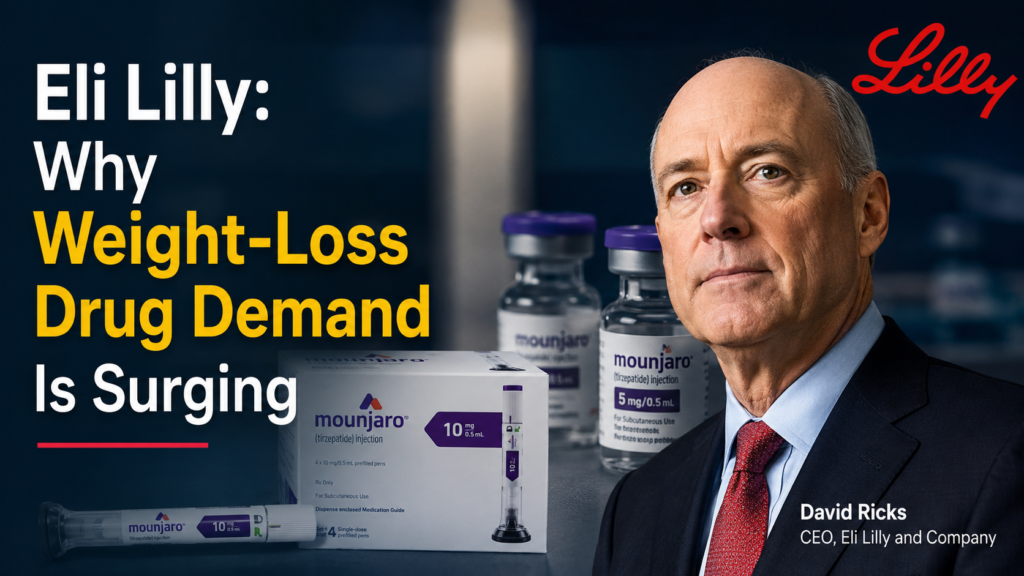

Eli Lilly is at the centre of the obesity-drug boom in 2026, as demand for its medicines remains strong and the company expands beyond weekly injections. The pharmaceutical group’s second-quarter results showed just how important obesity and diabetes treatments have become to its growth. Zepbound, its obesity treatment based on tirzepatide, generated $4.93 billion in sales in the quarter, while Mounjaro, the same active ingredient marketed for type 2 diabetes, generated $9.94 billion. Together, the two products represented a major share of quarterly revenue.
The company now has an approved daily GLP-1 pill, Foundayo, and is advancing retatrutide, an investigational medicine that could reshape the market if regulators approve it. Here is what is driving the company’s momentum, where the risks are, and what the latest 2026 developments mean for patients and investors.
Quick Facts
| Detail | Information |
|---|---|
| Company | Eli Lilly and Company |
| Headquarters | Indianapolis, Indiana, United States |
| Key obesity medicines | Zepbound and Foundayo |
| Diabetes medicine | Mounjaro |
| Q2 2026 revenue | $23 billion |
| Q2 2026 revenue growth | 48% year over year |
| 2026 revenue guidance | $85 billion–$87 billion |
The company reported $23 billion in second-quarter 2026 revenue, up 48% from a year earlier, and raised its full-year revenue forecast to $85 billion–$87 billion.
Why Eli Lilly Is Making Headlines in 2026
The company is closely watched because demand for GLP-1-based medicines has remained unusually strong. The 2026 results have made Eli Lilly a central reference point for the sector. In its second-quarter results, Lilly reported $23 billion in revenue, while Zepbound sales reached $4.93 billion and Mounjaro reached $9.94 billion. Reuters reported that the combined performance helped Lilly widen its lead over Novo Nordisk in the injectable obesity and diabetes market.
The growth reflects a broader shift in obesity treatment as medicines that influence appetite and metabolic hormones move into mainstream chronic disease care. The US Food and Drug Administration approved Zepbound in 2023 for chronic weight management in adults with obesity, or overweight with at least one weight-related condition, alongside a reduced-calorie diet and increased physical activity.
What Is Driving Demand for Zepbound?
Zepbound contains tirzepatide and acts on both GLP-1 and GIP receptors. It is given once a week, with doses adjusted under medical supervision. Its approval followed clinical trials showing meaningful weight reduction, helping make it a major competitor to semaglutide-based medicines such as Wegovy.
Demand has also been supported by efforts to improve affordability and access. The company has expanded cash-pay options and announced coverage arrangements with major pharmacy benefit managers. In June, Lilly said eligible Medicare Part D patients could access Zepbound or Foundayo through its Medicare GLP-1 Bridge programme from July 1, 2026.
That does not mean every patient can obtain the medicine. Coverage, eligibility, prescribing decisions and local rules vary. Zepbound is a prescription medicine, and the FDA-approved treatment includes important warnings and contraindications. People considering it should discuss the potential benefits and risks with a qualified healthcare professional.
Foundayo Gives the Company a New Route Into Weight Loss
One of the biggest changes in 2026 is Foundayo, Lilly’s oral GLP-1 medicine, also known as orforglipron. The FDA approved it in April for adults with obesity, or certain adults with overweight and weight-related medical problems. Unlike injectable GLP-1 medicines, Foundayo is taken once daily as a tablet and can be taken without food or water restrictions.
Lilly says people taking the highest approved dose in the ATTAIN-1 trial lost an average of 27.3 pounds, or 12.4%, over 72 weeks among participants who remained on treatment, compared with 0.9% with placebo. Those results do not mean every patient will achieve the same outcome, and clinical-trial results should not be treated as a personal prediction.
The pill could expand the market by giving patients another route into treatment and make oral therapy a bigger part of obesity care. Novo Nordisk is also developing oral options, while other drugmakers are pursuing different approaches to the same large market.
Retatrutide Could Be the Next Major Test
The next major question is retatrutide. It is an investigational triple-receptor agonist that targets GLP-1, GIP and glucagon pathways. Phase 3 data have shown substantial weight-loss effects, but retatrutide is not approved for general use and should not be confused with Zepbound or Foundayo.
In August 2026, Lilly filed lawsuits against six US businesses it accused of selling illicit versions of the experimental medicine. Reuters reported that the company had also referred more than 200 individuals and entities to federal and state authorities.
For consumers, the message is straightforward: an investigational medicine sold outside the authorised regulatory system is not equivalent to an approved prescription product. The FDA has warned about illegal marketing and distribution of unapproved GLP-1 products. Buying peptides from online sellers or using products labelled for research purposes can carry risks that are difficult for consumers to assess.
How the Company Compares With Novo Nordisk
The company’s strongest direct competitor is Novo Nordisk, whose obesity portfolio includes Wegovy. The two companies are competing on several fronts: weight-loss efficacy, injection and tablet formats, supply, pricing, insurance access and the speed of new-product development.
Novo Nordisk’s chief executive recently said the obesity market would not be a winner-takes-all contest, pointing to the range of patient needs and treatment formats that could emerge. Meanwhile, Lilly is building a broader portfolio that includes established treatments, an oral option and pipeline candidates.
For UK and European consumers, availability is a separate question from the US market. Approvals, reimbursement and prescribing rules differ by country, so US developments do not automatically apply elsewhere.
What the 2026 Results Mean for the Company
The company raised its full-year 2026 revenue forecast to $85 billion–$87 billion after its second-quarter performance. For Eli Lilly, the next phase will test whether growth can stay strong as competition increases.
Pricing pressure is one issue. Lilly has lowered some cash-pay prices, and insurers and public programmes can negotiate or influence what manufacturers ultimately receive. Competition is another. Novo Nordisk remains a major rival, and new oral drugs could change patient preferences.
Manufacturing, regulation and safety also matter. As the market expands, scrutiny of advertising, access, counterfeit products and long-term treatment is likely to increase.
The opportunity is unusually large, but expectations are also high. The company’s ability to supply medicines, maintain competitive pricing and produce safe, effective next-generation treatments will matter as much as headline sales growth.
Conclusion
The company’s 2026 momentum is being driven by more than a single weight-loss drug. Zepbound continues to generate billions in quarterly sales, Mounjaro remains a major diabetes product, and Foundayo gives the company an approved oral option for obesity treatment. Retatrutide adds another potential growth engine, although it remains investigational.
The broader lesson is that obesity medicine is becoming a large, competitive healthcare market rather than a short-lived pharmaceutical trend. Demand remains strong, but access, pricing, safety, regulation and competition will shape what happens next. For readers following Eli Lilly, the most important developments to watch are new clinical data, regulatory decisions, coverage changes and evidence of how patients respond to newer treatment formats.
For more celebrity news, profiles, facts and latest updates, visit DailyInfoz.co.uk.
(FAQs)
What is Eli Lilly best known for in weight-loss treatment?
Eli Lilly is best known in obesity care for Zepbound, a once-weekly tirzepatide injection approved by the FDA for chronic weight management. In 2026, the company also added Foundayo, an oral GLP-1 medicine. Together, these products give Eli Lilly both injectable and tablet options in the growing obesity-treatment market.
Why is Eli Lilly’s Zepbound in such high demand?
Eli Lilly’s Zepbound has benefited from strong clinical results, growing awareness of prescription obesity treatment and wider access. The company reported $4.93 billion in Zepbound revenue for the second quarter of 2026, a sign that demand remained strong. Actual access still depends on a patient’s medical circumstances, prescription, insurance coverage and location.
Is Foundayo the same as Zepbound?
No. Foundayo and Zepbound are different medicines. Foundayo is orforglipron, an oral GLP-1 taken once daily, while Zepbound contains tirzepatide and is administered by injection. The company markets both for chronic weight management in appropriate adults, but they have different active ingredients and dosing routes.
Is retatrutide approved for weight loss?
No. Retatrutide remains an investigational medicine and is not approved for general use by regulators. The company is studying it in late-stage clinical trials. Consumers should not assume that products sold online under the retatrutide name are authorised, tested alternatives to an approved prescription medicine.
Does the company make Mounjaro and Zepbound?
Yes. Both contain tirzepatide, but they have different approved uses and brand names. Mounjaro is used with diet and exercise to improve blood sugar in adults with type 2 diabetes, while Zepbound is approved for chronic weight management and certain other indications. Patients should use the product prescribed for their specific condition.
What should readers watch next from the company?
The main areas to watch are Zepbound and Foundayo demand, access and pricing, regulatory progress for new obesity medicines, and clinical results for retatrutide. Competition from Novo Nordisk and other drugmakers will also influence the market. For patients, medical advice and local regulatory guidance remain more important than headlines about market share.