
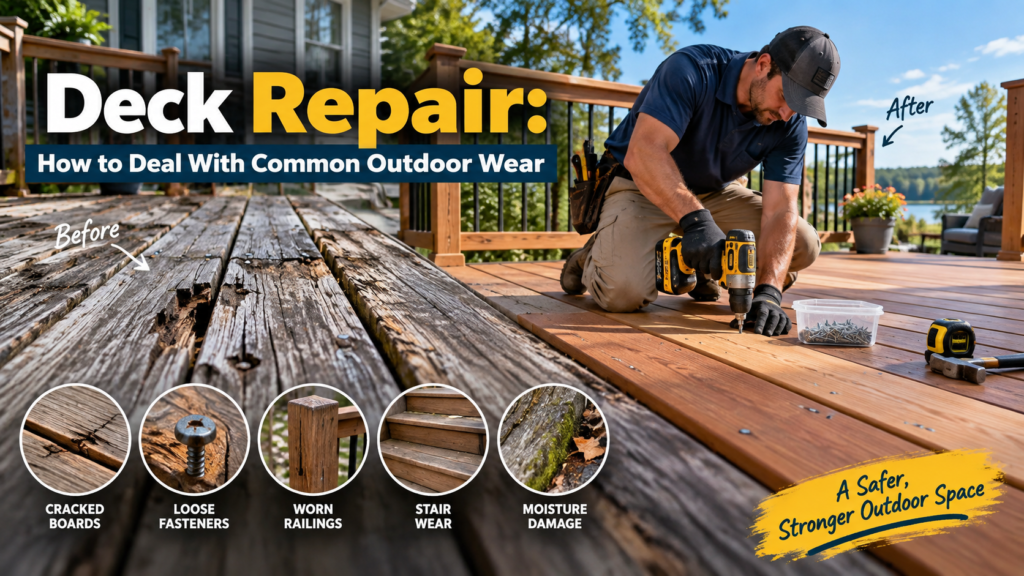

Outdoor decks rarely deteriorate all at once. Wear usually appears gradually: one
board develops a crack, a fastener loosens, or a stair begins to feel different
underfoot. Because the changes are incremental, homeowners may become
accustomed to them.
Planning deck repair when these warning signs first appear can make outdoor
maintenance easier to manage.
Why Deck Problems Develop
Outdoor structures live in a demanding environment. Rain introduces moisture,
sunlight affects surfaces, and temperature fluctuations cause materials to expand
and contract.
Regular foot traffic adds another source of wear.
Over time, these factors can affect individual components differently. One section
may remain in good condition while another needs attention.
Five Areas Worth Checking
A practical inspection can begin with five major areas: boards, fasteners, railings,
stairs, and moisture-prone locations.
Boards
Look for obvious cracking, lifting, movement, or deterioration. Pay attention to
changes since your previous inspection rather than judging appearance alone.
Fasteners
Connections help keep deck components stable. Fasteners that have loosened or
shifted may need attention.
Railings
Gently check whether railing sections feel secure during normal use. Unexpected
movement should not simply be ignored.
Stairs
Inspect treads and other visible stair components. Repeated use makes stairs an
important part of any maintenance check.
Damp Areas
Locations that stay wet longer than surrounding sections can experience increased
wear. Keep these areas clear of leaves and debris whenever possible.
Homeowners needing nearby outdoor repair assistance can document these
observations before arranging an assessment.
Repairing Versus Replacing Components
Localized damage does not necessarily mean every part of a deck requires
replacement.
When deterioration is limited, individual components may be repairable or
replaceable while unaffected sections remain intact. The appropriate approach
depends on the condition and function of the deck.
Widespread deterioration, significant structural movement, or extensive support
issues require a different level of evaluation than an isolated damaged board.
Avoid the Cosmetic-Only Trap
Improving appearance is valuable, but surface treatments cannot correct physical
deterioration underneath.
Before refinishing a deck, examine its physical condition. Loose or damaged
components should receive appropriate attention first.
This sequence creates a better foundation for cosmetic improvements.
Simple Habits That Support Deck Maintenance
Regular cleaning can help keep debris from holding moisture against the deck.
Moving objects occasionally can also reveal hidden areas that might otherwise
remain unnoticed.
Avoid allowing leaves and organic material to accumulate for long periods.
Most importantly, become familiar with how the deck normally feels. Changes in
movement, stability, or surface condition are easier to notice when you inspect the
space regularly.
When Should You Schedule an Inspection?
There is no need to wait for visible deterioration to become severe.
Consider checking the deck after harsh seasonal weather and before periods of
frequent outdoor use. An annual detailed review, supported by occasional visual
checks, can make maintenance more predictable.
Keep Notes or Photos
Taking periodic photographs can help you compare conditions from one season to
another. This is especially useful for cracks, discoloration, or areas that appear to be
changing gradually.
Conclusion
A deck is easier to maintain when homeowners respond to early signs of wear
instead of waiting for widespread deterioration. Boards, stairs, railings, connections,
and moisture-prone sections all deserve regular attention.
Thoughtful deck repair focuses on the condition of individual components while
considering the structure as a whole. With routine inspections and prompt attention
to developing issues, homeowners can maintain an outdoor space that remains
functional and enjoyable throughout changing seasons.