
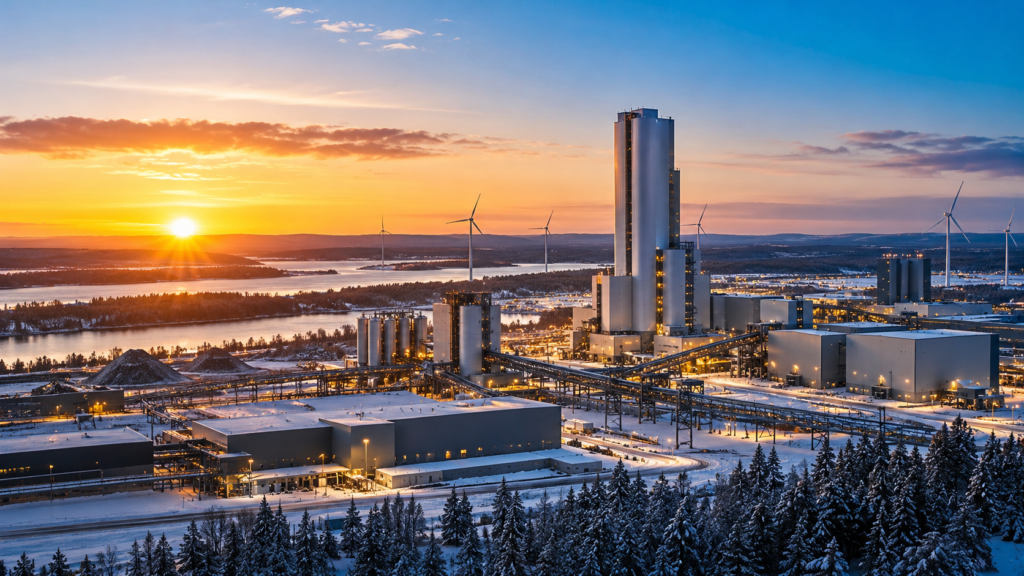

Bodenxt is the Municipality of Boden’s development platform for managing the rapid economic, industrial, and social transformation of Boden in northern Sweden. The initiative connects green industrial investment with housing, workforce development, local businesses, and infrastructure planning. Its purpose is to help the community prepare for significant changes while supporting sustainable, long-term growth.
Interest in Bodenxt has grown alongside major industrial investments in northern Sweden, particularly the green steel project being developed by Stegra. However, understanding the initiative requires looking beyond the factory itself. New industries need skilled workers, suitable housing, reliable transport, utilities, and public services. Coordinating these needs is central to the municipality’s approach.
This guide explains what Bodenxt means, how the programme operates, its relationship with green steel, the opportunities it may create, and the challenges that could influence its future.
What Is Bodenxt?
Bodenxt is a strategic development platform established by the Municipality of Boden to coordinate the town’s wider transformation. It is not a standalone software product or the name of the green steel manufacturer. Instead, it provides a framework for connecting different aspects of municipal development.
According to the municipality’s official website, the region is preparing for a development period that could compress the equivalent of approximately 20 years of societal change into just a few years. The programme was designed to help the municipality respond to this accelerated pace of investment and population change.
The name is associated with Boden’s next stage of development. Its central idea is that industrial expansion should be coordinated with the needs of the people who live and work in the area.
For example, a new industrial facility may create employment opportunities, but those opportunities cannot be fully realised if workers cannot find homes or access essential services. Bodenxt approaches these interconnected requirements as parts of a broader development process.
Why Was Bodenxt Created?
Boden, located in Norrbotten County in northern Sweden, is part of a region attracting investment in industrial production, energy, and other emerging industries.
The municipality identified the need to manage these changes across traditional administrative boundaries. Instead of allowing individual departments to address housing, transport, education, and business development independently, the programme brings related priorities into a coordinated structure.
The arrival of Stegra’s planned green steel facility has been a major accelerator. Large industrial projects can affect a community long before production begins, creating demand for construction workers, engineers, accommodation, transport connections, and supporting businesses.
Bodenxt therefore focuses on preparing the wider community for growth rather than concentrating exclusively on industrial construction.
The municipality’s experience also demonstrates why planning must remain flexible. Population changes, investment decisions, construction schedules, and labour-market requirements can develop at different speeds. A coordinated framework can help identify gaps between these developments and encourage relevant organisations to respond.
The Main Areas of Development
The municipality organises its work around skills supply, living and housing, business development, and infrastructure above and below ground. These areas are connected because progress in one can depend on improvements in another.
Skills and Workforce Development
Industrial expansion requires people with the appropriate technical knowledge and professional experience. These needs can extend beyond engineers and manufacturing specialists to include healthcare workers, teachers, construction professionals, service employees, and other occupations.
Bodenxt supports a broader approach to workforce planning by connecting employment needs with education, skills development, and recruitment.
The municipality has also highlighted the importance of attracting people who can establish lasting lives in Boden. When employees relocate with partners or families, access to education, employment opportunities for accompanying partners, and community services can influence whether they remain in the area.
This makes workforce development a social as well as an economic priority.
Housing and Everyday Living
Housing is one of the most important challenges facing Boden during its expansion.
An increase in employment opportunities can attract new residents, but the community must have sufficient accommodation for them. Without enough homes, companies may find recruitment more difficult, and existing residents may experience additional pressure on the housing market.
In May 2026, the municipality reported that the vacancy rate for rental apartments was close to zero, highlighting the seriousness of the shortage. It also explained that limited availability could affect population growth and employers’ ability to recruit.
Housing development involves more than constructing apartment buildings. New residential areas also require transport access, water and wastewater services, schools, healthcare, and other facilities.
Bodenxt places these considerations within the wider planning process so that housing growth can support a functioning community.
Business Development
A major industrial investment can create opportunities for businesses beyond the company operating the facility.
Local firms may supply equipment, construction services, transport, maintenance, accommodation, catering, and other services. New residents can also increase demand for shops, restaurants, professional services, and community activities.
Bodenxt’s business-development work aims to help the municipality create conditions in which existing companies can grow and new businesses can establish themselves.
However, these opportunities are not automatic. Companies still need skilled employees, suitable premises, predictable planning processes, and access to the infrastructure required for their operations.
The municipality’s 2026 business-climate reporting identified housing, workforce availability, and infrastructure as important factors influencing future growth.
Infrastructure Above and Below Ground
Infrastructure includes visible assets, such as roads and railways, as well as essential systems beneath the surface, including water, wastewater, and other utility networks.
Industrial development can increase demand for all of them. New facilities need reliable connections, while a growing population places additional pressure on municipal services.
A practical example is the railway connection to Boden Industrial Park. The municipality reported in December 2025 that the railway had been completed ahead of schedule and under budget. In June 2026, it announced the connection’s official inauguration.
Such infrastructure can improve industrial access and support economic activity. Nevertheless, the benefits depend on how effectively transport, utilities, residential development, and business requirements are coordinated.
How Bodenxt Connects With Stegra and Green Steel
Understanding the relationship between Bodenxt and Stegra is essential to understanding the wider development strategy.
Stegra is the industrial company developing a green steel facility in Boden. Bodenxt is the municipality’s platform for coordinating the broader community transformation associated with major investments, including Stegra’s establishment. The two have different responsibilities, even though their activities are closely connected.
Traditional steelmaking can produce substantial carbon dioxide emissions, particularly when it relies on coal-based processes. Green steel initiatives seek to reduce these emissions through alternative production methods, including the use of hydrogen in direct iron reduction and electricity from lower-carbon sources.
The environmental performance of a particular facility depends on its actual technology, energy supply, production processes, and operating conditions. The term green steel should therefore not be interpreted as meaning that every part of production has zero environmental impact.
Stegra’s project is part of the broader effort to develop lower-emission industrial production in Europe. If successful, such facilities could help industrial customers reduce the emissions associated with steel production.
For Boden, the implications extend beyond manufacturing. A large industrial project can affect employment, housing demand, transport requirements, municipal revenue, and the local business environment.
Bodenxt addresses this wider context by connecting industrial development with the community’s capacity to accommodate change.
Potential Benefits for Residents and Businesses
The main potential benefit of Bodenxt is coordinated growth. When public authorities, employers, educational organisations, and businesses plan together, they have a better opportunity to identify shared needs and address problems before they become more difficult to resolve.
For residents, successful planning could mean additional employment opportunities, improved infrastructure, new housing, and a broader range of local services.
For businesses, industrial investment may create new customers, supply contracts, recruitment opportunities, and reasons to establish operations in the region.
The initiative could also contribute to regional development by strengthening links between education providers and employers. Training programmes that respond to real labour-market requirements can help residents prepare for emerging occupations while giving employers access to relevant skills.
These benefits, however, should be understood as potential outcomes rather than guaranteed results. They depend on whether investments proceed, housing becomes available, infrastructure keeps pace with demand, and local organisations can manage the resulting changes.
Challenges That Could Affect Its Success
Bodenxt operates in a demanding environment because several forms of development are happening simultaneously.
Housing is an immediate concern. The municipality’s reported near-zero rental vacancy rate in May 2026 illustrates how accommodation shortages can limit the benefits of economic expansion. Even when jobs are available, people may be unable to relocate without suitable housing.
Workforce availability presents another challenge. Rapid industrial growth requires specialised skills, while local healthcare, education, construction, and service providers also need employees. Competition for workers can make recruitment difficult across multiple sectors.
Infrastructure must also expand at an appropriate pace. New homes, industrial facilities, and population growth can increase demand for transport, water, wastewater treatment, electricity, and other essential services.
Finally, economic investment involves uncertainty. Project schedules, financing conditions, construction costs, and market demand can change. Municipal plans must account for these risks rather than assume that every announced investment will be delivered exactly as expected.
These challenges mean that the success of Bodenxt should be judged not only by industrial investment figures but also by practical outcomes for residents, businesses, and public services.
How to Follow Bodenxt’s Progress
People interested in the initiative can follow developments through the official Municipality of Boden website at
The municipality publishes information about housing, infrastructure, workforce development, business conditions, and other community projects. Its news section is particularly useful for tracking changes over time.
Readers should pay attention to the distinction between plans, construction milestones, completed infrastructure, and operational industrial facilities. An announced project is not necessarily a completed project, and construction progress does not automatically establish that a facility has begun commercial production.
Following official municipal announcements alongside company updates provides a clearer picture of how the wider transformation is progressing.
Conclusion
Bodenxt represents the Municipality of Boden’s effort to manage rapid industrial and societal change through coordinated planning. Its approach connects green industry with housing, workforce development, infrastructure, and business growth rather than treating these priorities as separate issues.
The initiative’s long-term value will depend on practical results: whether sufficient homes become available, businesses can recruit employees, infrastructure meets growing demand, and residents benefit from economic development.
Boden’s transformation illustrates a broader lesson for regions attracting major industrial investment. New factories can create opportunities, but lasting success also requires a community equipped to support the people and businesses behind that growth.
Frequently Asked Questions
What does Bodenxt mean?
Bodenxt is the name of the Municipality of Boden’s platform for coordinating the town’s major green and societal transformation. It connects industrial growth with housing, workforce development, business activity, and infrastructure planning.
Is Bodenxt a company or a software platform?
No. In its official municipal context, Bodenxt is a development platform for coordinating change across Boden. It is not the name of the green steel manufacturer or a consumer software product.
What is the relationship between Bodenxt and Stegra?
Stegra is developing the green steel facility in Boden. Bodenxt coordinates the wider municipal response to development pressures associated with major industrial investments, including housing, infrastructure, workforce needs, and local business opportunities.
Where is Bodenxt located?
The initiative concerns Boden Municipality in Norrbotten County, northern Sweden. The official municipal website provides information about the programme and its development projects.
What are the main challenges facing Bodenxt?
The key challenges include housing shortages, workforce recruitment, infrastructure capacity, public-service demand, and uncertainty surrounding the timing and delivery of major investments. The municipality has specifically identified housing availability as a serious constraint.
Why is Bodenxt relevant to green industrial development?
Green industrial projects require more than factories and production technology. They also need workers, homes, transport, utilities, and supporting businesses. Bodenxt is relevant because it addresses the wider community requirements associated with this type of industrial transition.