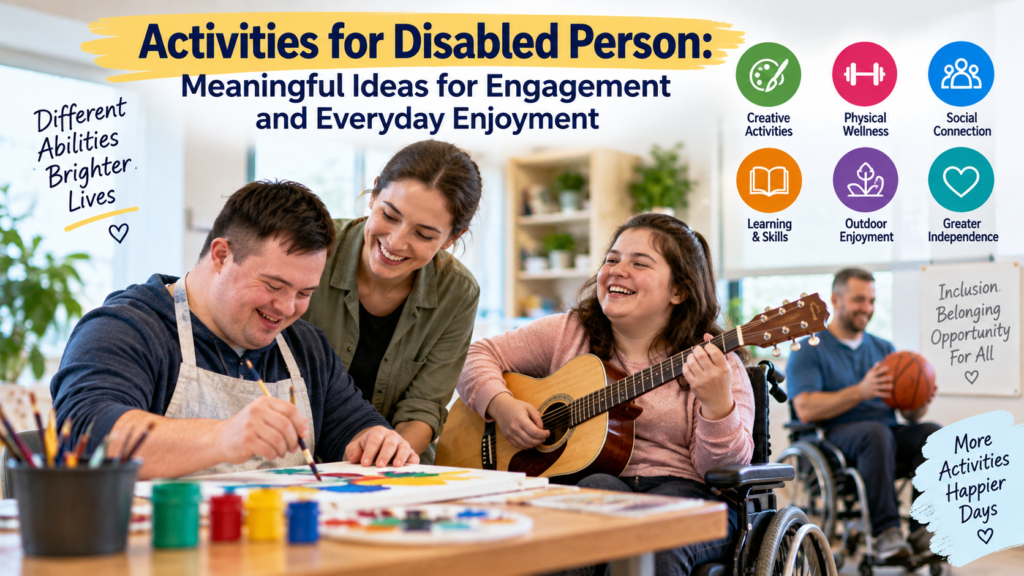

Meaningful activities can bring structure, enjoyment, confidence, and connection into everyday life. When choosing activities for disabled person, the focus should be on individual interests and abilities rather than disability itself. An enjoyable activity gives a person opportunities to participate, make choices, learn something useful, or simply have a good time. From creative hobbies to community outings, there are many ways to build a balanced routine that feels personal and rewarding.
The best approach begins with understanding what someone likes. Activities become more meaningful when adults have a genuine voice in deciding how they spend their time.
Why Meaningful Activities Matter
A busy schedule does not automatically create a fulfilling life. Activities should have a purpose that matters to the participant.
For one adult, that purpose might be relaxation. Another may want more social interaction, physical movement, creative expression, or opportunities to develop practical skills.
Regular participation can also provide something positive to anticipate. Familiar activities create routine, while occasional new experiences introduce variety and encourage exploration.
Start With Strengths and Preferences
Instead of beginning with limitations, consider what the individual already enjoys and does well.
Someone who enjoys organizing objects may like puzzles, collections, crafts, or sorting activities. A person who responds positively to music might enjoy dancing, singing, rhythm games, or attending musical events.
These interests provide useful starting points for building an engaging activity schedule.
Creative Activities Encourage Self-Expression
Artistic activities allow adults to communicate ideas and preferences in ways that do not depend entirely on verbal communication.
Drawing, painting, photography, pottery, scrapbooking, and simple crafts can all provide opportunities for creativity. Activities can be adjusted to match motor abilities, attention levels, and sensory preferences.
The goal does not need to be artistic perfection. Choosing colours, textures, materials, or designs can itself provide meaningful opportunities for decision-making.
Music Creates Flexible Opportunities
Music can be enjoyed independently or with others.
Listening to favourite songs, playing simple instruments, singing, creating playlists, or participating in movement activities can make music part of an enjoyable routine.
Because music can be adapted easily, it can work well for people with a wide range of interests and abilities.
Include Practical Everyday Experiences
Daily living activities can also be enjoyable when they connect with personal interests.
Cooking is a good example. Selecting a meal, gathering ingredients, preparing food, and sharing it with others combines practical learning with creativity and social interaction.
Gardening, organizing a room, caring for plants, or planning a weekly schedule can provide similar opportunities to practise useful abilities.
Encourage Choice During Daily Tasks
Choice makes activities more personally meaningful.
Rather than deciding everything for someone, offer opportunities to select what to cook, which activity to try, where to go, or how long to participate.
Even small decisions can strengthen confidence and help adults become more comfortable expressing preferences.
Explore Physical and Outdoor Activities
Movement can support an active lifestyle while also creating opportunities for enjoyment.
Walking, swimming, dancing, stretching, adapted games, and recreational sports can be considered according to individual mobility and comfort.
Outdoor activities may include gardening, nature walks, picnics, photography, or visiting accessible parks.
The activity should suit the person rather than forcing the person to fit the activity.
Make Social Interaction Natural
Social opportunities can develop through shared interests.
Game nights, hobby groups, cooking sessions, community classes, volunteering, and recreational gatherings give people something specific to do together. This shared focus can make interaction feel more natural.
Not everyone enjoys large groups, however. Some adults may prefer activities with one or two other people.
Respecting these differences can make social experiences much more positive.
Volunteering Can Create a Sense of Contribution
For adults who are interested and appropriately supported, volunteering can provide a meaningful way to participate in community life.
Activities might involve helping with community projects, organizing materials, supporting an event, or completing other suitable responsibilities.
Contributing to something that matters can create pride and a stronger sense of belonging.
Adapt Activities Without Removing Independence
Support should make participation possible without unnecessarily taking control away from the individual.
For example, a complicated activity might be divided into smaller steps. Visual instructions, adapted equipment, demonstrations, or additional preparation time may also help.
Assistance can then be adjusted as the person becomes more familiar with the activity.
This approach allows support and independence to work together.
Build a Balanced Weekly Routine
Variety can prevent routines from becoming repetitive.
A balanced week might include physical movement, creative activities, practical responsibilities, social experiences, quiet hobbies, and community outings.
Rest also matters. Adults should not feel pressured to participate constantly.
The goal is a routine that provides meaningful opportunities while respecting energy levels, preferences, and personal boundaries.
Conclusion
Choosing enjoyable activities for disabled person begins with seeing the individual first. Interests, strengths, comfort, communication style, and personal choices should guide every decision.
Creative hobbies, movement, practical experiences, social gatherings, volunteering, and outdoor recreation can all contribute to an engaging lifestyle. When activities are accessible and personally meaningful, they can support confidence, participation, connection, and a stronger sense of control over everyday life.