

Vehicle glass is easy to take for granted until something goes wrong. A stone hits the windshield, a side window
develops damage, or a crack suddenly becomes longer after a cold night. These problems can affect much more
than the appearance of a vehicle. Clear, properly maintained glass contributes to visibility, protection from the
weather, and everyday driving comfort.
Understanding auto glass repair can help drivers respond appropriately when damage occurs. From recognizing
early warning signs to knowing when professional assessment is necessary, a little knowledge can prevent
uncertainty and help drivers make better decisions about damaged vehicle glass.
Auto Glass Is More Than Just a Window
Vehicle glass performs several important functions. The windshield provides a clear view of traffic while protecting
occupants from wind, insects, stones, and other road debris. Side and rear glass help maintain visibility around the
vehicle and keep the passenger compartment protected from outside conditions.
Because glass has practical and protective purposes, damage should not be treated as purely cosmetic.
Even a small chip deserves attention. Depending on its location and condition, continued driving may expose that
weakened area to additional stress.
What Causes Auto Glass Damage?
Damage can occur almost anywhere, from busy highways to a driveway or parking area. Some causes are sudden,
while others gradually make existing damage worse.
Loose Stones and Road Debris
Flying stones are among the most familiar causes of windshield damage. Tires can throw loose gravel or small
pieces of road debris into the air, where they may strike another vehicle.
The impact can leave a small chip, pit, or crack.
Severe Weather
Hail, falling branches, and debris carried by strong winds can damage different sections of vehicle glass. Seasonal
conditions can also contribute indirectly by placing additional stress on existing chips.
Accidental Impact
Door glass and other windows may be damaged by accidental contact with hard objects. Regardless of the cause,
shattered or heavily cracked glass should receive prompt attention.
Repair or Replacement: How Is the Decision Made?
One of the first questions drivers ask is whether damaged glass can be repaired. There is no universal answer
because every case is different.
The size, depth, location, and type of damage all matter. The age and cleanliness of a chip may also affect whether
it is suitable for repair.
Repairing Limited Damage
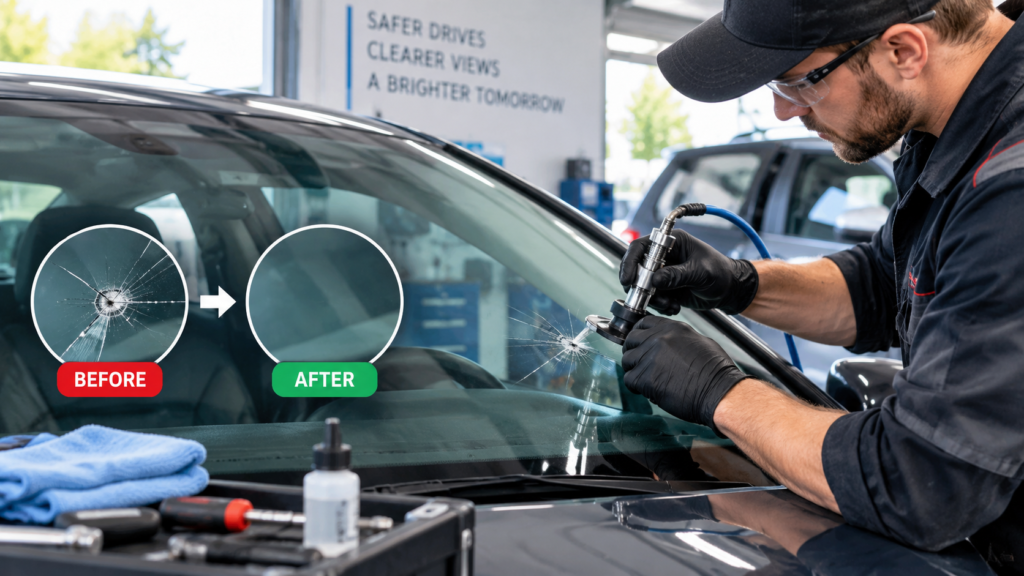
Certain small windshield chips may be candidates for repair when addressed early. Repair aims to stabilize
appropriate damage and reduce the chance of further spreading.
The repaired area may still retain some visual evidence of the original impact. Therefore, the primary objective
should be restoring stability rather than expecting the glass to look completely untouched.
When Replacement Becomes Necessary
Extensive cracking or severe damage may require replacement. Broken door glass and other heavily damaged
vehicle windows may also need to be replaced rather than repaired.
A professional inspection is the best way to determine the appropriate approach.
Why Prompt Auto Glass Repair Matters
Waiting to address damaged glass introduces uncertainty. A small chip that appears stable today may change after
a pothole, temperature shift, or long highway drive.
As a vehicle moves, vibration travels through its structure. The windshield is exposed to these forces continuously.
Temperature changes can add further stress. When the glass heats and cools, it expands and contracts slightly.
Existing damage can create a vulnerable point where cracks may begin to spread.
Drivers needing an assessment can explore local auto glass assistance rather than waiting for visible damage to
become more extensive.
Common Signs That Vehicle Glass Needs Attention
Not every problem looks like a dramatic crack. Some warning signs are subtle.
A fresh impact mark, small star-shaped chip, spreading line, or damaged edge should be inspected. Drivers should
also pay attention to glass that interferes with visibility.
Check More Than the Windshield
The windshield receives considerable attention, but it is not the only glass on a vehicle.
Inspect front and rear door windows, quarter glass, and rear glass occasionally. Damage to these areas can affect
weather protection, security, and visibility.
Making glass inspection part of routine vehicle care helps identify problems earlier.
What to Do Immediately After Discovering Damage
First, avoid touching or pressing the damaged area. Unnecessary pressure may place additional stress on
weakened glass.
Keep the area as clean and dry as reasonably possible. Dirt and moisture can enter some chips, particularly when
repair is delayed.
Avoid extreme temperature changes when practical. During cold conditions, for example, gradually warming the
windshield is preferable to subjecting damaged glass to sudden heat.
Finally, arrange an assessment instead of relying on guesswork.
Preventing Future Auto Glass Problems
Not every chip or crack can be prevented, but sensible driving habits can reduce some risks.
Maintain adequate distance from vehicles travelling on gravel or carrying loose materials. Reduce speed when
road surfaces contain significant debris, and use extra caution around construction areas.
When parking during severe weather, choose sheltered locations when safely available.
Regular inspections are equally useful. Finding damage early can provide more options than discovering it only
after a crack has travelled across the glass.
Conclusion
Auto glass repair is an important part of responsible vehicle maintenance. Windshields, side windows, and rear
glass contribute to visibility, weather protection, comfort, and the overall driving environment.
When damage occurs, avoid assuming that a small mark is harmless. Examine the glass, protect the damaged
area, and arrange an appropriate assessment before road vibration or temperature changes make the problem
worse.
By paying attention to early warning signs and making vehicle-glass checks part of routine maintenance, drivers
can address problems sooner and maintain a clearer, safer view of the road ahead.