
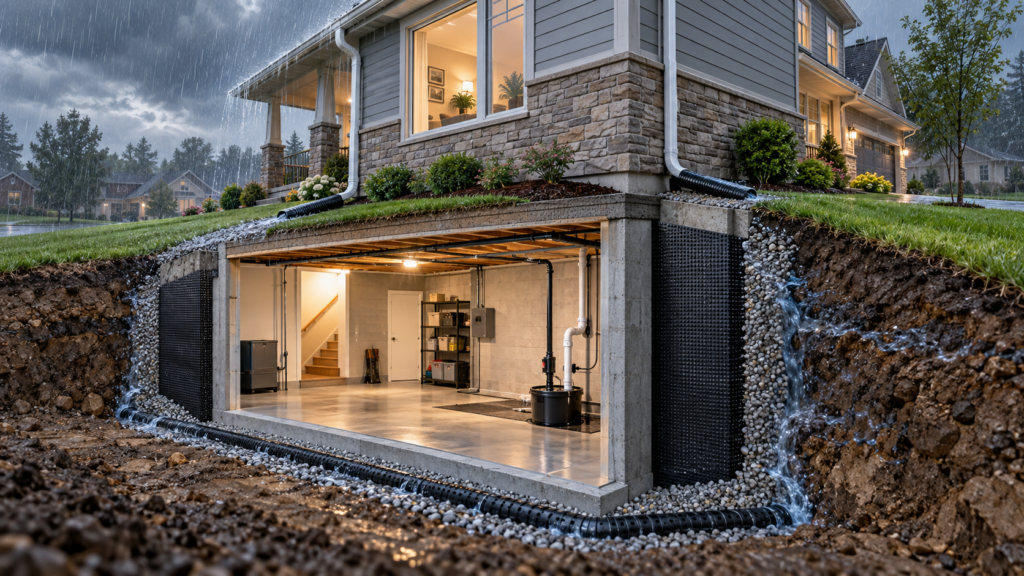

A basement can be one of the most useful spaces in a home. It can serve as a storage area, living space, home office, laundry room, or even an extra room for the family. However, when water begins entering the basement, that useful space can quickly become a source of stress.
Basement moisture is not always caused by a major flood. Small cracks, poor drainage, overflowing gutters, blocked drainage systems, or water collecting around the foundation can all contribute to problems over time. If these warning signs are ignored, moisture may continue to affect the basement and potentially create more expensive repair needs.
For homeowners, understanding the causes of basement water problems is an important first step. Proper drainage, waterproofing, and foundation maintenance can help protect the structure and make the basement a healthier and more practical part of the home.
Why Basement Water Problems Should Not Be Ignored
Water that enters a basement does not simply disappear. Even a small amount of moisture can leave behind damp surfaces, unpleasant smells, stains, and other signs that something needs attention.
One common problem is water collecting around the outside of the foundation. When rainwater is not directed away from the property, the soil around the foundation can become saturated. Over time, that water may find its way through cracks or other weak points.
Homeowners may also notice peeling paint, damp walls, water stains, or a musty smell. These signs should not automatically be treated as minor cosmetic issues. They can indicate that moisture is entering the basement repeatedly.
Taking action when the first signs appear can make it easier to identify the source of the problem and determine an appropriate solution.
Drainage Plays an Important Role
A home’s drainage system has a major role in controlling where rainwater goes. Gutters collect water from the roof, while downspouts should help move that water away from the foundation.
When downspouts discharge water too close to the house, large amounts of rainwater can collect near the foundation. Poor grading in the yard can create a similar problem because water may naturally flow toward the home rather than away from it.
This is why homeowners should look beyond the basement itself when dealing with water problems. The source may be outside the property.
Professional basement and drainage services can help homeowners identify these issues and consider solutions based on the condition of the property. For homeowners dealing with recurring moisture, basement waterproofing and drainage solutions can be part of a wider approach to protecting the basement and foundation.
Signs Your Basement May Have a Moisture Problem
Not every basement water problem looks the same. Some signs are obvious, while others can be easy to overlook.
Common warning signs include:
- Water appearing on the basement floor
- Damp or stained basement walls
- A persistent musty smell
- Visible cracks in foundation walls
- Water collecting near the home’s foundation
- Peeling paint or damaged wall coverings
- Standing water outside the home after rainfall
- Soil erosion close to the foundation
- Moisture appearing around basement windows
A single sign does not necessarily mean that a major repair is required. However, repeated or worsening symptoms deserve attention.
The important point is to identify the cause instead of simply covering up the visible damage.
Foundation Cracks Can Become a Concern
Small foundation cracks are not unusual in many homes, but their location, size, movement, and cause can vary. Some cracks may be associated with normal settling, while others may be connected to water pressure, soil conditions, or structural movement.
Water can also use cracks as an entry point into a basement. If a crack repeatedly allows moisture to enter, sealing the visible area without understanding why the crack exists may not address the wider problem.
That is why a proper inspection can be useful A professional can examine. the foundation and surrounding conditions before suggesting a repair approach.
Depending on the situation, foundation work may involve crack repair, reinforcement, drainage improvements, or other measures. The correct solution depends on the specific condition of the property rather than applying the same repair to every home.
Basement Waterproofing Is More Than Stopping Visible Water
Many homeowners think waterproofing simply means stopping water from appearing on the basement floor. In reality, effective moisture management can. involve several parts of the property.
Exterior drainage, interior drainage, sump pump systems, foundation cracks, gutters, downspouts, and the condition of the basement itself can all be relevant.
For example, a basement may remain damp because water is continuously being directed toward the foundation from outside. In another property, a crack may be allowing groundwater to enter. A different home may have a drainage or sump pump issue.
Because every property has different conditions, homeowners should avoid assuming that one solution will work for every basement.
Companies specialising in basement waterproofing and foundation services, such as Quality Basement Solutions, provide services that can include waterproofing, foundation repair, drainage solutions, sump pumps, crawl-space encapsulation, and crack repair.
Why Sump Pumps Can Be Important
A sump pump can be an important part of a basement water-management system, particularly in homes where groundwater or drainage conditions create a risk of water accumulation.
The basic purpose of a sump pump is to remove collected water and move it away from the property. However, simply having a sump pump does not mean a basement can never experience water problems.
The system needs to be appropriate for the home’s conditions and maintained properly. Homeowners should also understand what happens if there is a power failure or if the pump stops operating.
Regular inspection can help identify problems before heavy rainfall puts additional pressure on the system.
Crawl Spaces Also Need Attention
Basement waterproofing is not the only part of moisture management. Homes with crawl spaces can also experience problems caused by damp soil, condensation. groundwater, or poor ventilation.
A damp crawl space may contribute to unpleasant odours and can affect the environment beneath the home. Moisture can also remain hidden for long periods before homeowners notice visible signs inside the living areas.
Crawl-space encapsulation and moisture-control measures may be considered depending on the condition of the space. As with basement waterproofing, the right approach depends on the property’s specific circumstances.
Preventive Maintenance Can Save Future Trouble
Homeowners do not always need to wait until water enters the basement before taking action. Simple maintenance can reduce some common drainage risks. Gutters should be kept clear of leaves and other debris. Downspouts should
direct water away from the foundation Homeowners should also. look for areas where rainwater repeatedly collects close to the house. After heavy rainfall, it can be useful to check the basement for damp areas, new stains, or water
entry. Outdoor areas should also be inspected for standing water or soil erosion. These. simple checks do not replace professional inspection when a serious problem is present, but they can help homeowners notice changes early.
When Should You Consider Professional Help?
If basement moisture keeps returning despite basic maintenance, it may be time to investigate the underlying cause.
Professional help can be particularly. useful when there are recurring leaks. visible foundation cracks, standing water, drainage problems, or signs that the issue is becoming worse.
An inspection can help determine. whether the main concern involves waterproofing, drainage, foundation movement, a sump pump, or another issue.
The goal should not simply be to hide the visible signs of water. A better approach is to understand where the water is coming from and why it is reaching the basement in the first place.
Protecting the Basement Protects More Than a Room
A basement is connected to the wider structure of a home, so moisture problems should be considered as part of the property’s overall maintenance.
Good drainage helps control rainwater. Proper waterproofing can address moisture entry. Foundation maintenance can help deal with cracks and. Wther concerns, while sump pumps and drainage systems can assist with water management where appropriate.
For homeowners, early attention can be valuable. A small damp area may be easier to investigate than a long-standing moisture problem that has been allowed to continue.
Ultimately, keeping a basement dry requires more than reacting after water appears. Regular maintenance, good drainage, timely inspections, and appropriate waterproofing measures can all contribute to a healthier and better-protected home.