
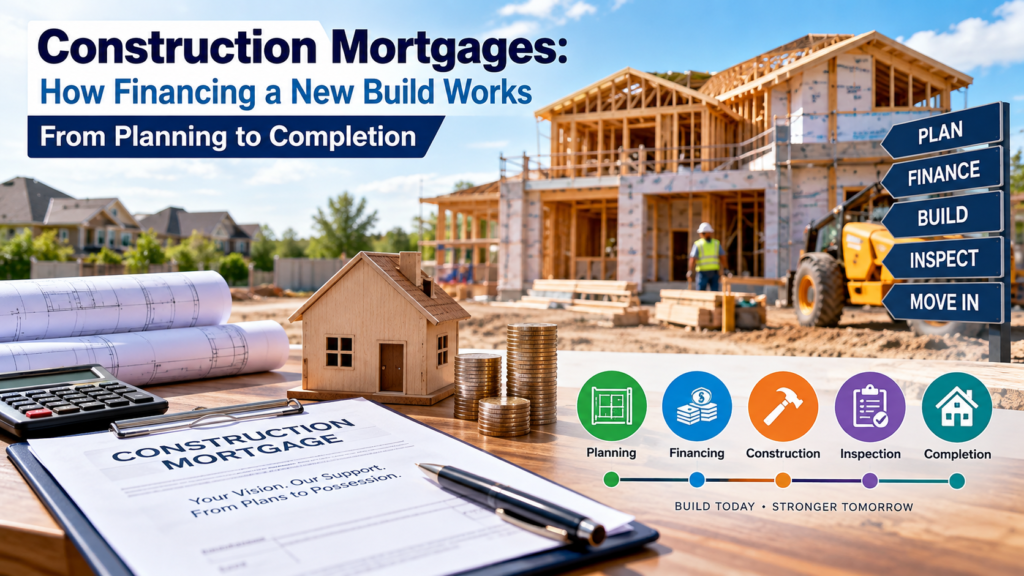

Building a property from the ground up can be exciting, but financing the project is very different from obtaining a mortgage for an existing home. With a completed property, a lender can assess a finished asset before advancing funds. During construction, however, the property’s value changes as work progresses. This is why construction mortgages often involve staged funding, detailed budgets, progress reviews, and careful planning.
Whether someone is building a primary residence, replacing an existing structure, or completing another eligible development, understanding the financing process before construction begins can prevent unnecessary complications. A realistic budget, reliable timeline, sufficient financial reserves, and organized documentation can all contribute to a smoother project.
Why Construction Financing Works Differently
A standard mortgage generally provides financing against a property that already exists in substantially completed form.
Construction financing deals with an evolving asset. At the beginning of the project, the site may contain only land or an unfinished structure. As foundations, framing, mechanical systems, and finishing work are completed, the property’s value can change.
Because of this progression, lenders may not provide the entire approved amount at once.
Funding May Be Released in Stages
Construction financing commonly involves advances or draws tied to specific stages of the project.
Rather than receiving all funds immediately, borrowers may receive financing as qualifying work is completed and applicable requirements are satisfied.
This structure helps connect the amount advanced with the progress and value of the property.
Borrowers should understand the draw process before work begins because contractors and suppliers may expect payment according to schedules that do not perfectly match financing advances.
Begin With a Detailed Construction Budget
A realistic budget is one of the most important parts of planning a new build.
The budget should account for more than visible construction materials. Site preparation, labour, permits, professional services, utility connections, inspections, interior finishes, landscaping, and other project expenses can add substantially to the total cost.
Small changes across multiple categories can also create a significant overall increase.
Include a Contingency Reserve
Construction rarely proceeds exactly according to the original estimate.
Material requirements can change, hidden site conditions may appear, weather can cause delays, or design modifications may become necessary. Maintaining a contingency reserve can help absorb these unexpected expenses.
Without a financial cushion, even a manageable cost increase could disrupt the project.
A conservative budget can therefore provide greater protection than one built around the lowest possible estimates.
Understand the Importance of the Building Plan
Lenders need to understand what is being built.
Depending on the project and financing structure, borrowers may need to provide building plans, construction estimates, permits, property information, contracts, and other supporting documentation.
The more clearly the project is defined, the easier it becomes to assess its scope and expected progression.
Major changes after financing has been arranged can complicate the process. Borrowers should therefore finalize important design decisions as early as practical.
Choose Contractors Carefully
The people completing the work can have a major influence on both the construction schedule and the financial outcome.
Borrowers should evaluate relevant experience, references, contracts, project timelines, and payment expectations before committing to a contractor.
A written agreement can help clarify responsibilities and reduce misunderstandings.
Coordinate Payment Schedules With Financing
Contractor payment expectations deserve particular attention.
If a contractor requires payment before a financing draw becomes available, the borrower may need sufficient cash to cover the temporary difference.
Understanding when funds can be advanced and when construction invoices become payable helps prevent cash-flow problems midway through the project.
Speaking with an experienced construction financing professional can help borrowers identify questions they should consider when planning the financing side of a build.
Expect Progress Reviews
Because construction financing can be released in stages, progress may need to be verified before additional funds are advanced.
The review may consider whether the expected work has been completed and how the property’s development corresponds with the financing arrangement.
Borrowers should avoid assuming that completing one construction milestone automatically guarantees immediate access to the next advance.
Documentation and applicable conditions may still need to be satisfied.
Plan for Construction Delays
Even carefully managed building projects can experience delays.
Weather, labour availability, inspections, material deliveries, permit issues, or changes to the original design can extend the timeline.
A delay is not merely an inconvenience. It can affect temporary housing arrangements, contractor schedules, financing needs, and household cash flow.
Build Flexibility Into Your Timeline
An overly optimistic completion date can create unnecessary pressure.
Instead, borrowers should build some flexibility into both the construction schedule and financial plan. If the project finishes earlier, that flexibility causes little harm. If it runs late, the borrower has more room to adapt.
Regular communication with contractors can also help identify potential delays before they become serious problems.
Keep Project Records Organized
Good recordkeeping can make a complex construction project easier to manage.
Borrowers should maintain copies of contracts, invoices, receipts, permits, approved plans, inspection information, change orders, and financing documents.
Keeping these records organized can help when information is needed for a draw or when the borrower wants to compare actual spending with the original budget.
Tracking expenses throughout construction is particularly important. Waiting until the end of the project to calculate cost overruns can make it difficult to correct problems.
Think About Financing After Completion
Construction financing is only one stage of the property’s financial life.
Borrowers should understand what is expected once the building is completed. Depending on the arrangement, the next stage may involve transitioning into longer-term mortgage financing.
Planning for that transition early can help prevent surprises near completion.
Borrowers should continue managing credit, income documentation, debt, and savings carefully throughout the building period because their broader financial position may remain relevant.
Avoid Unnecessary Changes During the Build
Design changes can be tempting once construction begins.
A different layout, upgraded materials, additional rooms, or premium finishes may seem worthwhile, but repeated modifications can quickly increase both costs and construction time.
Before approving a change, homeowners should calculate its full financial impact rather than considering only the immediate expense.
Changes can affect labour, materials, schedules, and other parts of the project.
Disciplined decision-making can help keep the build aligned with the original financial plan.
Conclusion
Financing a new construction project requires more planning than simply securing funds and beginning the build. Borrowers need to understand staged advances, prepare a detailed budget, maintain financial reserves, coordinate contractor payments, organize documentation, and anticipate potential delays.
A successful construction financing strategy also looks beyond the building phase. Homeowners should understand how financing may transition after completion and continue maintaining a stable financial position throughout the project.
With a realistic budget, carefully selected contractors, organized records, and sufficient flexibility for unexpected changes, borrowers can approach construction with greater confidence and reduce the risk that financing issues interrupt progress before their new property is complete.