
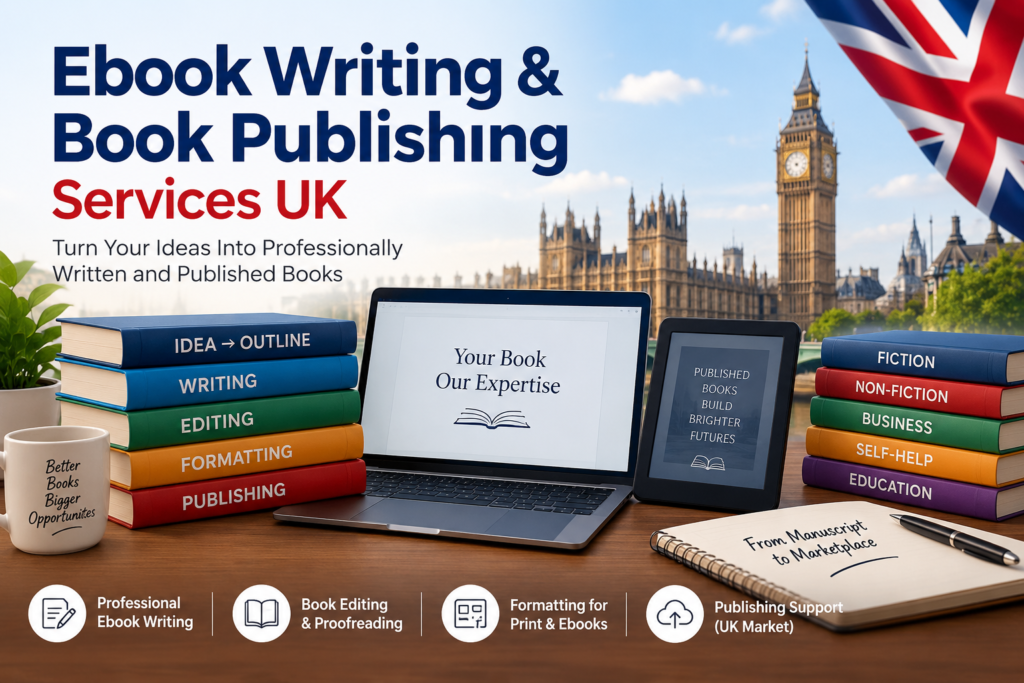

Having a book idea is exciting. Turning it into something readers can enjoy takes planning, clear writing and careful preparation. For many UK authors, the difficult part is knowing which help to seek and when to seek it.
You might have years of professional knowledge, a personal story or several unfinished chapters. Each starting point calls for different support. Paying for a publishing package before understanding your manuscript can mean buying services you do not yet need.
This guide explains how an ebook writing service differs from publishing support, what to check before committing, and how to prepare for a productive working relationship. The aim is to help you make informed decisions while keeping your readers, budget, and creative goals in view.
Define Your Book’s Purpose Before Exploring Publishing Services in the UK
Before requesting quotes, write one sentence explaining what your book should achieve. A memoir might preserve family experiences. A business guide might answer questions your clients regularly ask. A novel might introduce readers to characters and conflicts you have imagined for years.
Next, identify your intended reader. Consider their interests, existing knowledge, and reasons for choosing your book. A practical handbook for experienced professionals needs a different approach from an introduction for complete beginners.
Finally, decide what success means to you. It could involve selling copies, supporting speaking opportunities, or producing a book for a small community. A clear goal makes it easier to judge which services offer value.
Ebook Writing Versus Book Publishing: Key Differences for Aspiring UK Authors
Writing develops the content. Publishing prepares that content for release and makes it available through agreed channels. The two activities connect, but they require different skills and deliverables.
An ebook writing service may help turn interviews, notes, or an outline into chapters. Publishing support may involve editing, cover design, interior layout and distribution arrangements. Never assume that buying one automatically includes the other.
Use your current manuscript stage to identify the next useful step.
| Your starting point | Support to discuss | Deliverable to request |
| An idea and scattered notes | Planning and writing | Approved outline and draft chapters |
| Several unfinished chapters | Manuscript development | Completion plan and revised draft |
| A complete rough manuscript | Structural editing | Editorial assessment and agreed revisions |
| A polished manuscript | Design and formatting | Cover proofs and prepared book files |
| Files ready for release | Publishing coordination | Distribution details and launch checklist |
These stages provide a discussion framework. A manuscript assessment can reveal that your book needs a different sequence or a narrower scope of work.
What UK Authors Should Expect From Professional Ebook Writing Services
The most useful starting document is a clear brief. Include your subject, intended audience, approximate length, and preferred tone. Share relevant notes, recordings, and examples of your own writing so the writer can understand how you communicate.
For nonfiction, explain the central promise of the book. What should readers understand or be able to do by the final chapter? For fiction, describe the main character, central problem, and emotional direction. For memoir, identify the experiences you want to explore and any boundaries around sensitive material.
Ask to approve an outline before substantial drafting begins. Then review a sample chapter for voice, depth and structure. Giving specific feedback at this stage is easier than requesting changes across an entire manuscript later.
UK Print and Publish describes its ebook writing service as support for developing ideas, notes and drafts into manuscripts, with staged writing and author feedback. Authors can use that overview to prepare questions about their own project’s scope and review process.
Keep Your Authentic Voice When Working With UK Ebook Writers
Professional support works best when your involvement is planned. Set aside time to read each draft and gather comments into one document. Separate factual corrections from preferences about wording, pacing, or emphasis.
Instead of saying a chapter feels wrong, explain the problem. Perhaps the language sounds too formal, an example feels unfamiliar to UK readers, or a personal memory has lost its emotional meaning. Specific observations give the writer something practical to address.
Agree on which decisions need your approval. These might include the outline, sample chapter, major revisions, and final manuscript. Keep approved versions clearly labelled so everyone works from the same text. This simple habit reduces confusion and protects time that should be spent improving the book.
What Should Book Publishing Services Include for Authors Across the UK?
When comparing book publishing services UK authors can access, ask for a written breakdown of the work included. The phrase can describe anything from limited production help to coordinated support across several stages.
Editing and Proofreading
Ask the provider to explain what their proposed edit addresses. Does your manuscript need help with structure and pacing, sentence clarity, or spelling and consistency? These are different tasks. A final proofread should follow the main revisions, with another check of the prepared pages before approval.
Cover Design and Interior Preparation
Your cover should give readers a useful sense of the book’s subject or genre. Inside, typography, headings, and spacing should support comfortable reading. Request previews that show actual chapters, including any images, tables or unusual elements, rather than approving a layout from one attractive sample page.
Release and Distribution Arrangements
Ask where your book will be available, who manages the listings, and how changes are handled. Request a clear distinction between making a title available to order and securing physical shop stock. Ask separately about marketing responsibilities, since production and distribution do not explain how readers will discover your book.
UK Print and Publish outlines editing, design, formatting, printing and distribution support on its book publishing services UK page. Confirm the exact combination included in your written proposal, especially if you want both digital and printed editions.
Book Ownership and Creative Control: Essential Questions for UK Authors
Ownership deserves attention before writing begins. In the UK, commissioning someone to create a copyright work does not automatically make you its copyright owner. Official guidance explains that the creator is normally the first owner unless otherwise agreed in writing.
Ask the agreement to explain ownership of commissioned text, illustrations and cover artwork. Clarify any licences, permissions or restrictions, including whether you can reuse material in future editions or promotional content.
Practical control matters too. Establish who holds publishing accounts, receives sales information and authorises changes. Ask what files you receive when the project finishes and what happens if you later move to another provider.
Record agreed answers in the contract rather than relying on a sales conversation. Both parties should understand the arrangement before work starts.
How UK Authors Can Compare Writing and Publishing Costs Confidently
A headline price tells you little without a description of the work. Two proposals may appear similar while allowing different manuscript lengths, editing levels or revision rounds.
Request an itemised quote in pounds, with any applicable VAT clearly identified. Check payment stages, cancellation terms and the charges for work outside the agreed scope. Ask whether images, permissions, printed proofs, delivery and later corrections are included or separate.
For writing, establish how additional interviews or an increased word count affect the fee. For publishing, ask how adding another format changes the total.
Set a budget that leaves room for essential corrections. If funds are limited, discuss a staged project. Completing and editing the manuscript before commissioning production can give you a clearer basis for the next decision.
Prepare Your Ebook and Print Editions for Readers Across the UK
If you want both an ebook and a printed book, include both in the brief from the beginning. Ask how the provider will prepare and check each edition, especially where your manuscript contains illustrations, footnotes, or tables.
For the ebook, request checks of navigation, links, headings, and readability at different text sizes. For print, inspect margins, page numbers, image quality and the physical proof. Review captions and references after layout, since they can become separated from the material they explain.
UK publication also brings legal deposit responsibilities, and electronic publications fall within the system. Ask who will handle the applicable deposit arrangements and check current submission guidance for your format.
Before signing off, make one final check that the approved title, author name, and book description match across the files and planned listings.
Plan Your UK Book Launch With a Realistic Publishing Schedule
A useful schedule identifies decisions as well as delivery dates. Include time for interviews, drafting, author feedback, editing, design, checking, and final approval. Ask what happens when a stage needs further work.
Your own availability affects progress. If you can only review chapters at weekends, tell the team at the outset. Agree how feedback will be collected and who answers questions when several people contribute to the project.
Avoid announcing a fixed launch date while major content decisions remain unresolved. Instead, connect the release plan to approved milestones. Once the manuscript and production requirements are stable, you can plan announcements with greater confidence and give preparation the attention it needs.
Create a Clear Book Brief for Your UK Publishing Project
A useful brief also records what your book will leave out. Without boundaries, a practical guide can become too broad, while a memoir can become a list of events without a clear focus. Name the central subject and identify material that belongs in a future project.
For example, an author planning a guide for new managers could organise chapters around common workplace situations. Each chapter might introduce a problem, explain an approach and finish with a short exercise. This gives the writer a repeatable structure and helps the author assess whether the draft serves its audience.
Keep a source folder alongside the brief. Separate your own experiences from research, quotations, and material that may need permission. Mark uncertain facts for checking instead of presenting them as settled. A tidy handover helps the team identify gaps before they become expensive changes during production. Keep these materials together throughout.
Choose Writing and Publishing Support That Matches Your UK Author Goals
The right starting point is an honest assessment of what you already have. Bring your current draft, a short description of your audience and a realistic budget to the first discussion.
Ask UK Print and Publish to explain the work required, what you will receive, and when your approval is needed. A written plan gives you something concrete to evaluate and helps turn a broad publishing ambition into manageable decisions.
Frequently Asked Questions
Can I Get Help if I Only Have an Idea?
Yes. You can approach an ebook writing service with an idea, notes, or recorded thoughts. Prepare a short explanation of your audience and purpose. Ask whether planning and interviews are included, and agree on an outline before the full manuscript is drafted.
Do I Need Writing Support if My Manuscript Is Finished?
Not necessarily. A complete manuscript may need editing rather than new writing. Request an assessment that identifies the actual issues. If only a few sections require development, ask whether the proposal can focus on those areas instead of rewriting the whole book.
How Much Will Writing and Publishing Cost?
The total depends on the agreed work, manuscript length, complexity, and formats. Request an itemised quotation rather than relying on a general package label. Compare what each fee covers, including revisions and final files, and identify costs that may arise after publication.
How Can I Compare Book Publishing Services UK Authors Use?
Compare relevant work samples, the proposed process and the written terms. Ask who handles your project, how feedback works, and what happens if changes are needed. Look for clear answers about deliverables, ownership, distribution, payments and support after the book is released.
Will My Book Still Sound Like Me?
Your involvement can help preserve your voice. Share writing samples, explain your preferred tone, and review a sample chapter early. Point out wording that feels unlike you. Agree on regular review stages so the writer can respond before the same issue appears throughout the manuscript.
Does a Publishing Package Include Marketing?
Only if marketing is expressly included in the agreed scope. Ask for named activities, deliverables, and any separate spending requirements. A finished book still needs a plan for reaching suitable readers. Discuss your own role in that plan before committing to a publication date