
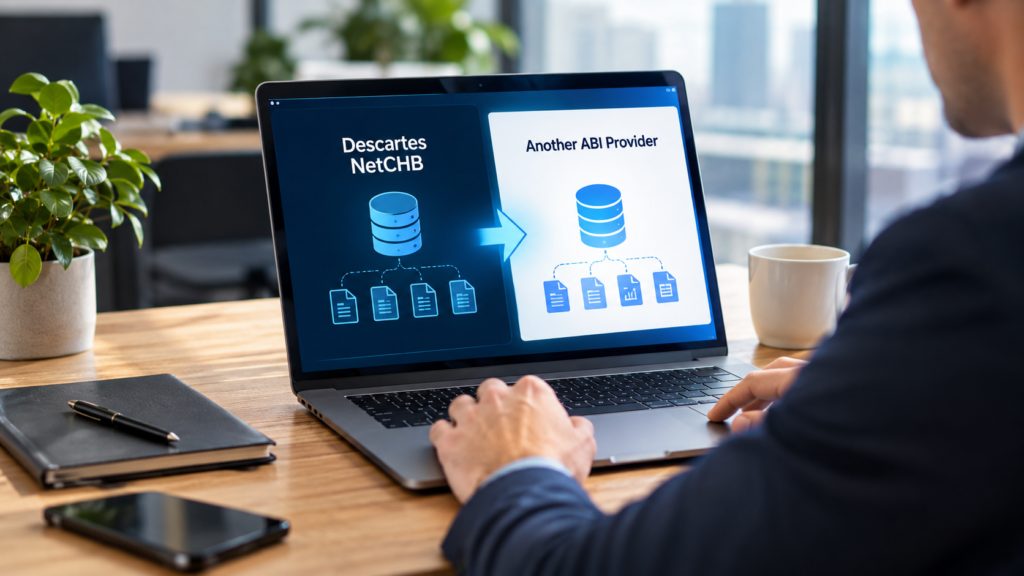

Changing customs filing technology is a significant operational decision. Filing processes may connect with importer records, product classifications, user permissions, reporting systems, and external data sources. That means switching from Descartes NetCHB to another ABI provider should be treated as a structured migration project rather than a simple software replacement.
A careful transition can help businesses preserve data integrity, maintain filing continuity, and reduce disruption for employees and customers.
Why Organizations Consider Switching
Businesses may evaluate a new ABI environment for many reasons.
Transaction volumes may have increased beyond the capabilities of an existing workflow. Integration requirements may have changed. Teams may need stronger automation, improved reporting, or more efficient exception management.
Whatever the reason, the organization should define its objectives before beginning the transition.
Write Down the Desired Outcomes
Instead of saying that the existing system is “too difficult,” identify the specific problem.
Perhaps employees spend too much time rekeying information. Maybe reporting requires extensive manual work. Perhaps high-volume processing creates bottlenecks.
Clear goals make it easier to determine whether switching from Descartes NetCHB to another ABI provider will actually solve the underlying issue.
Map the Existing Filing Process
Before moving to a new platform, document how transactions currently flow.
Where does shipment data originate?
Who reviews it?
Which steps require manual intervention?
What happens when information is missing?
This process map helps teams distinguish between technology problems and procedural problems.
A new platform will not automatically fix inefficient business rules.
Identify Data That Must Be Preserved
Customs operations depend on accumulated information.
Importer records, product details, classifications, templates, filing histories, user settings, and supporting documents may all be important.
Businesses should categorize this information before migration.
Separate Active and Historical Data
Not every record needs to move in the same way.
Frequently used product and importer data may need to be immediately available in the new environment, while older records may simply require secure access for reference and retention purposes.
Planning this distinction can simplify migration.
Rebuild Integrations Carefully
Changing ABI technology may affect connections with other systems.
Order data, transportation information, accounting records, or product databases may currently feed the filing workflow.
Every integration should therefore be reviewed.
Organizations considering ABI filing migration support should document field mappings and data ownership before rebuilding connections.
Test Data Quality
Migration provides an opportunity to clean existing information.
Duplicate records, outdated classifications, incomplete product descriptions, and inconsistent fields should not automatically be carried into a new environment.
Better source data can improve the performance of the new workflow.
Build a Testing Environment
Switching from Descartes NetCHB to another ABI provider should include extensive testing before full adoption.
Teams can begin with representative filing scenarios.
Routine entries should be tested first, followed by transactions containing more complicated product or shipment characteristics.
Testing should also cover rejected records, missing fields, corrections, and other exceptions.
Train Users Around Real Workflows
Generic system training is useful, but workflow-specific training is more valuable.
Employees should understand how the new environment handles the transactions they process every day.
Training can include data intake, validation, review, submission, exception handling, reporting, and record retrieval.
Document New Procedures
If workflows change, internal operating procedures should change as well.
Updated documentation creates consistency and helps new employees understand the process later.
Consider a Controlled Transition
Moving every transaction to a new environment at once can create unnecessary risk.
Where operationally appropriate, businesses may use controlled implementation stages.
This gives teams an opportunity to observe performance, identify issues, and refine procedures.
A structured transition is particularly valuable for high-volume customs operations where even a short disruption can affect thousands of transactions.
Conclusion
Switching from Descartes NetCHB to another ABI provider involves far more than choosing new technology. Businesses should map existing processes, define migration objectives, protect critical data, rebuild integrations carefully, test realistic scenarios, and prepare users for new workflows.
The transition can also become an opportunity to improve outdated procedures. By removing unnecessary manual work and strengthening data quality during migration, organizations can build a more scalable and reliable customs filing environment for future growth.




ozvzzvzwnokwsrgfwmzwqupmmrskeo